How to Keep a Journal You'll Actually Keep Writing In
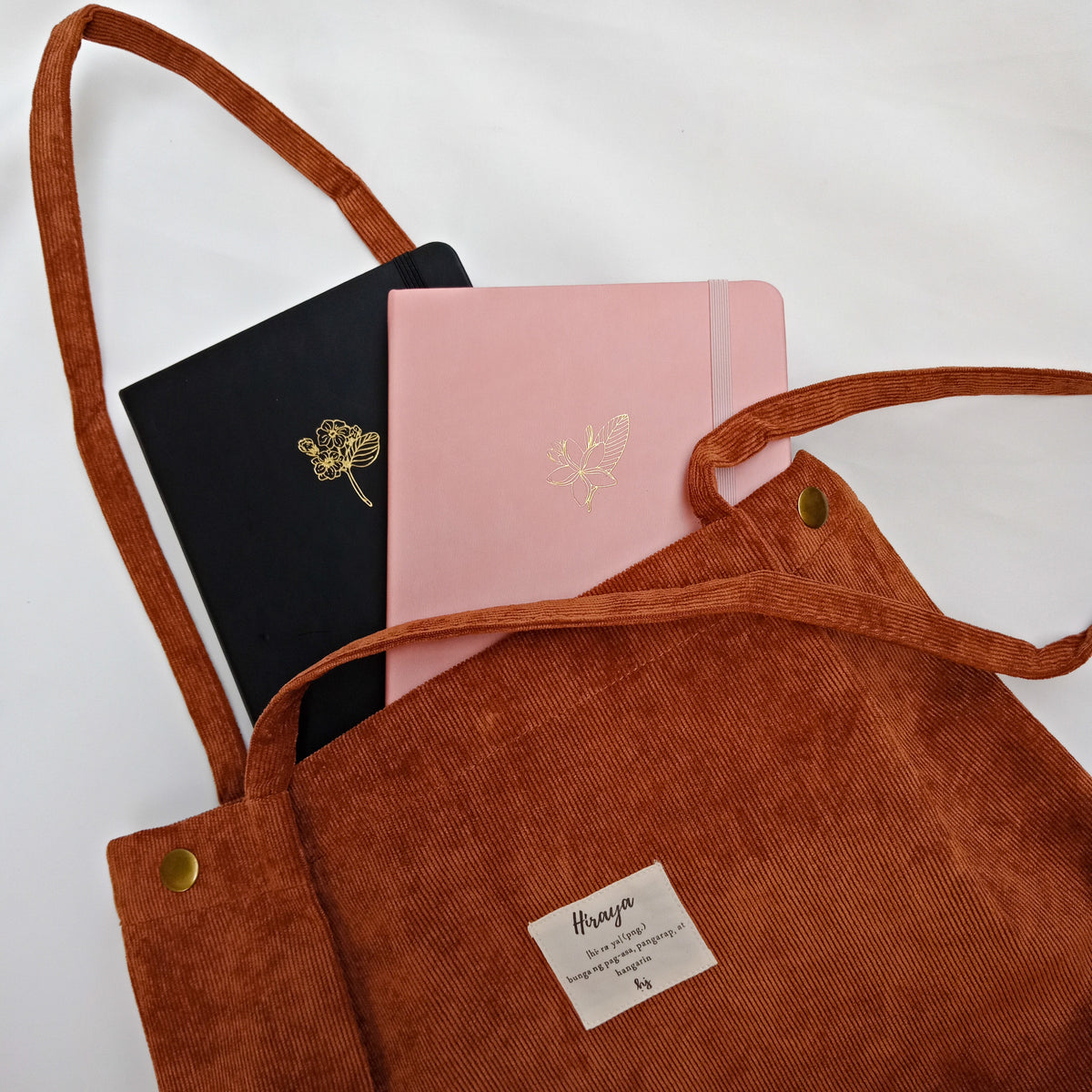
There is a particular kind of guilt that comes from buying a beautiful notebook and then leaving it untouched.
You choose the cover carefully. You like the paper. You tell yourself this will be the notebook. You write the date on the first page. Maybe you write something thoughtful underneath it.
Then life happens. Three weeks later, the notebook is still sitting on your desk, looking increasingly disappointed.
If this has happened to you, the problem probably isn't that you don't know how to journal. You may simply be trying to maintain a journaling habit that doesn't fit the way you actually live.
A journal doesn't need to become another responsibility. It doesn't need to be filled every morning. It doesn't need to contain profound thoughts.
And it definitely doesn't need to look like the beautifully photographed journals you see online. You can make your journal useful, messy, inconsistent, ordinary, funny, unfinished, and completely yours.
Here are a few ways to make that easier.
First: stop trying to journal correctly
There isn't a correct way to keep a journal.
You can write three pages. You can write three words. You can draw. You can make lists. You can paste receipts into it. You can write down overheard conversations. You can complain about your day. You can document something you don't want to forget. You can use one page to plan your week and the next to write a poem.
A journal can hold different versions of you. It doesn't have to have one purpose.
If you're waiting until you have something important enough to write down, you're probably going to leave a lot of blank pages.
Ordinary things are worth recording, too. What did you eat? What made you laugh? What were you thinking about on the train? What song have you played six times today? What did you notice on the walk home? What are you avoiding? What are you looking forward to?
A journal can be a record of a life while it's happening—not just a collection of its most meaningful moments.
Don't make the first page too precious
This is surprisingly important.
A beautiful notebook can become intimidating because you don't want to “ruin” it. So you keep waiting for the right thing to put on page one.
Then page one remains empty.
So write something imperfectly. Write the date. Draw a terrible flower. Make a grocery list.
Write your name. Use a page as a test page. Once the notebook has evidence that it is allowed to be used, it becomes much easier to use.
Your journal is not a museum exhibit. It's a working object.
Give yourself a reason to open it
“Journal every day” is a schedule.
It isn't necessarily a reason.
Instead, think about what you actually want the journal to do for you. Maybe you want somewhere to:
-
collect writing ideas
-
process difficult days
-
remember things
-
plan projects
-
practice writing
-
document trips
-
sketch
-
keep track of books you've read
-
record dreams
-
develop characters
-
save interesting words
-
make lists
-
think through decisions
Once you know what you want from your journal, using it becomes much easier. If your journal is for ideas, you don't have to wait until you feel reflective. You can simply write down the idea.
Try a “small enough” rule
One of the easiest ways to abandon a habit is to make every session too large.
If your idea of journaling is sitting down for thirty minutes every night, you may start thinking of journaling as a task. Instead, make the minimum almost laughably small.
One sentence counts.
So does:
One paragraph.
One list.
One drawing.
One thing you noticed today.
Once you've started, you may want to continue.
Sometimes you won't. That's fine. The goal isn't to trick yourself into writing more. It's to remove the idea that journaling only counts if you produce a substantial entry.
Don't punish yourself for missing days
This might be the most important rule.
If you don't write for four days, you do not need to spend the fifth day explaining why you haven't written for four days.
You can simply write:
September 21.
And continue.
You don't have to catch up. You don't need to recreate everything you missed. Your journal isn't an attendance sheet. A gap doesn't mean you've failed at journaling.
It means there was a gap. That's all.
Date your entries
This is a small habit with a surprisingly large payoff.
Write the date.
You don't need to record the exact time, weather, location, and moon phase unless you enjoy doing that. Just knowing when something was written gives your future self context.
Years later, you'll be able to look back and see: Oh. I was thinking about this then.
Sometimes the things that feel insignificant while you're living them become interesting in retrospect.
Don't worry about your handwriting
Your journal isn't being graded.
Your handwriting can change depending on whether you're tired, rushing, angry, excited, or trying to write on the bus. That's part of the record.
You don't need perfect lettering. You don't need decorative headers. You don't need to turn every page into a spread. If you enjoy decorating your journal, do it.
If you don't, don't. A journal is allowed to look anything you want it to.
Use prompts when you have nothing to say
Prompts are useful because sometimes the hardest part is deciding where to begin.
Try:
- Right now, I am thinking about...
- Something I noticed today was...
- I wish I had said...
- A small thing that made today better was...
- Something I'm avoiding is...
- If I could go back to this morning, I would...
- I keep thinking about...
- I don't know why, but...
- Today felt like...
- Something I want to remember about this week is...
You don't need to answer the prompt beautifully. You just need to answer it honestly enough to get somewhere.
Make different kinds of entries
If every journal entry has to be “Dear Diary,” you may eventually run out of energy for it.
Give yourself other formats.
Lists
-
Things I want to read
-
Things I need to buy
-
Things I want to learn
-
Things I noticed today
-
Places I want to visit
-
Things I am currently obsessed with
Fragments
Write down sentences without explaining them.
The smell of rain on the pavement.
A yellow house with a blue gate.
I should call Mama.
Why do I keep thinking about that conversation?
Fragments can become writing later.
Letters
Write a letter you don't intend to send.
To your past self.
Your future self.
Someone you miss.
Someone you're angry with.
Someone you haven't met yet.
Observations
Describe a person sitting across from you.
Describe your room.
Describe the street outside.
Describe what your hands look like while you're writing.
Observation is a form of attention, and journals are very good places to practice it.
Keep the journal where you can see it
If your journal lives in a drawer underneath three other things, you're going to forget about it.
Put it somewhere you naturally spend time.
Beside your bed.
On your desk.
Inside your work bag.
Next to your coffee or tea.
Wherever makes sense for your routine.
The goal isn't to create the prettiest journaling corner.
It's to make the distance between thinking about journaling and opening the notebook as small as possible.
Don't buy a new notebook every time you lose momentum
This is difficult advice for people who love stationery. But sometimes the solution to an abandoned journal is not another journal.
You don't need a fresh start every time you miss a few days.
Continue in the same notebook.
If you really want a new one, that's fine too. Just don't make the new notebook responsible for creating a new version of you. Habits usually survive better when they're allowed to be imperfect.
Your journal can change with you
Maybe you start with morning pages and eventually hate morning pages.
Stop doing them.
Maybe you begin with long entries and later prefer lists.
Make lists.
Maybe you want to write every day for a month and then don't touch your journal for six weeks.
Open it again when you want to.
Your journal doesn't have to stay the same just because you started it one way.
And if you want to make your journal part of your creative practice...
This is where journaling gets especially interesting.
A notebook can become a place where you collect raw material. A phrase you overheard can become dialogue. A memory can become a scene. A strange dream can become a story. A list of things you hate can reveal what you care about. A description of a place can become the beginning of an essay. A question you can't answer can become the subject of a poem.
You don't always know what something will become when you write it down. You don't need to.
Keep the material. Let it sit. Come back to it later. Writing doesn't always happen in a straight line. Sometimes you write something today that doesn't become useful until six months from now.
The best journal is the one you actually use
Not the most expensive one. Not the most beautiful one. Not the one with the most elaborate spreads.
The useful one. The one with coffee stains. The one with crossed-out sentences. The one where the handwriting gets messier on difficult days. The one where you wrote something silly on Tuesday and something important three pages later. The one you can open without feeling like you have to perform for yourself.
You don't need to become a person who journals perfectly. You just need to give yourself somewhere to put things.
Start with a page. Write the date. See what happens.
Want to learn with us?
Our workshops are practical, welcoming, and open to beginners.
Browse workshops ↗